In the Indian education system, the debate of CGPA vs Percentage is endless. One university hands you a grade point (like 8.5 or 9.2), while another gives you a straight number (like 78% or 85%).
But when you sit for placements or apply for a Masters degree abroad, which one matters more? Is a 9.0 CGPA actually better than 85%?
This guide breaks down the major difference between CGPA and percentage, why colleges and companies prefer different metrics, and which one holds more value for your career.
What is the Difference Between CGPA and Percentage?
Before we decide which is better, let’s understand how they work.
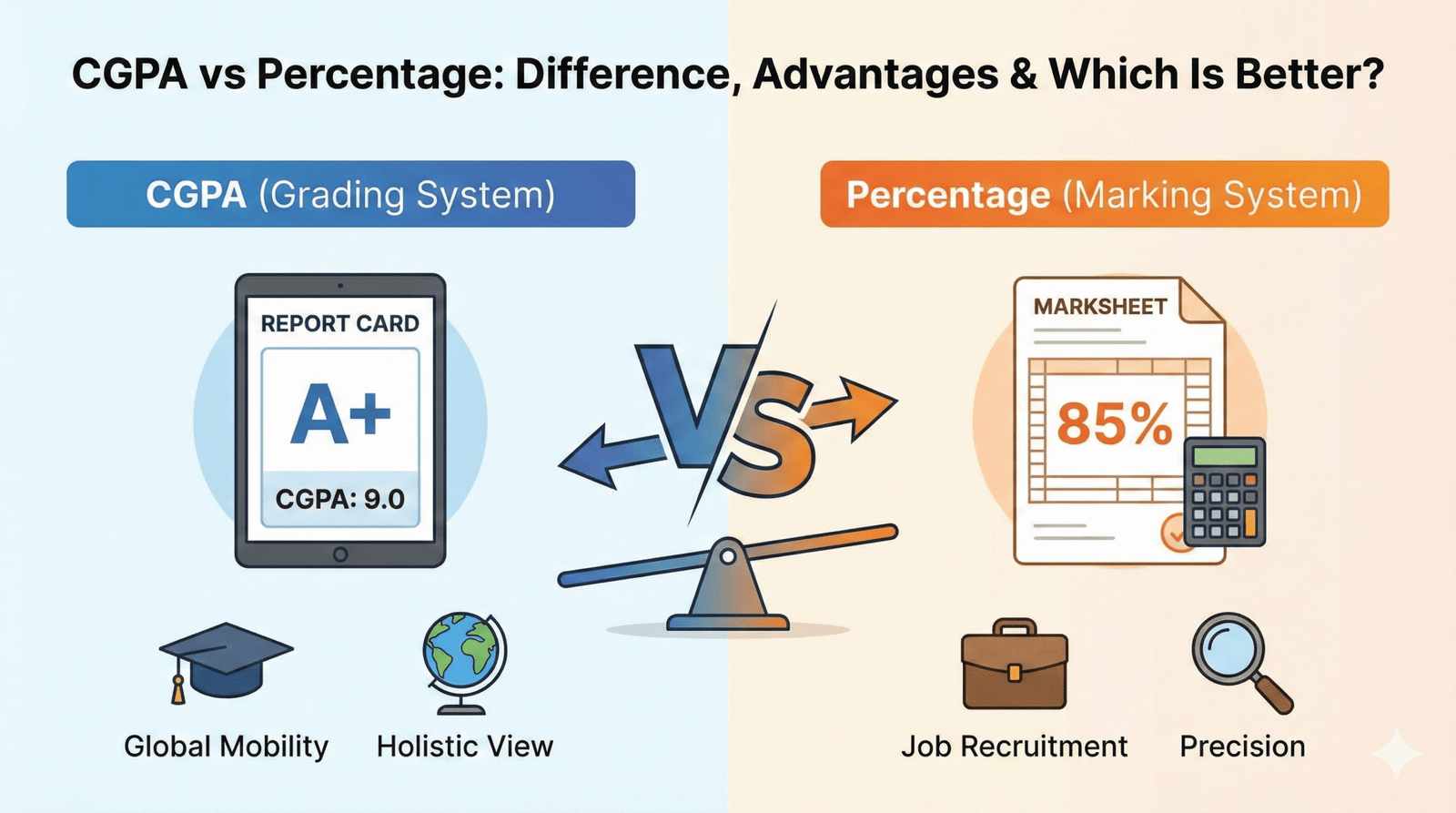
- Percentage: This is an absolute scoring method. If you score 85 marks out of 100, your percentage is simply 85%. It represents your exact performance in exams.
- CGPA (Cumulative Grade Point Average): This is a relative grading system. It groups marks into “bands.” For example, anyone scoring between 91 and 100 marks might get the same grade point (10 points). It represents an average of your performance across all semesters.
Why Do Colleges Use CGPA?
You might have noticed that most modern universities (like DU, JNU) and boards (like CBSE) have shifted to the grading system. Here is why:
- Reduces Pressure: Percentage systems can be brutal. The difference between 89.9% and 90% is tiny, but it feels huge to a student. CGPA groups these students into the same band, reducing stress.
- Holistic View: CGPA is often calculated based on credits. It gives more weight to core subjects (which have higher credits) rather than treating every subject equally.
- International Standard: Most universities abroad (USA, UK, Europe) use a GPA system. Indian colleges adopted CGPA to make it easier for students to apply for higher studies globally.
Why Do Companies Ask for Percentage?
Despite colleges moving to grades, why do TCS, Infosys, and government exams (like bank PO) still ask for Percentage?
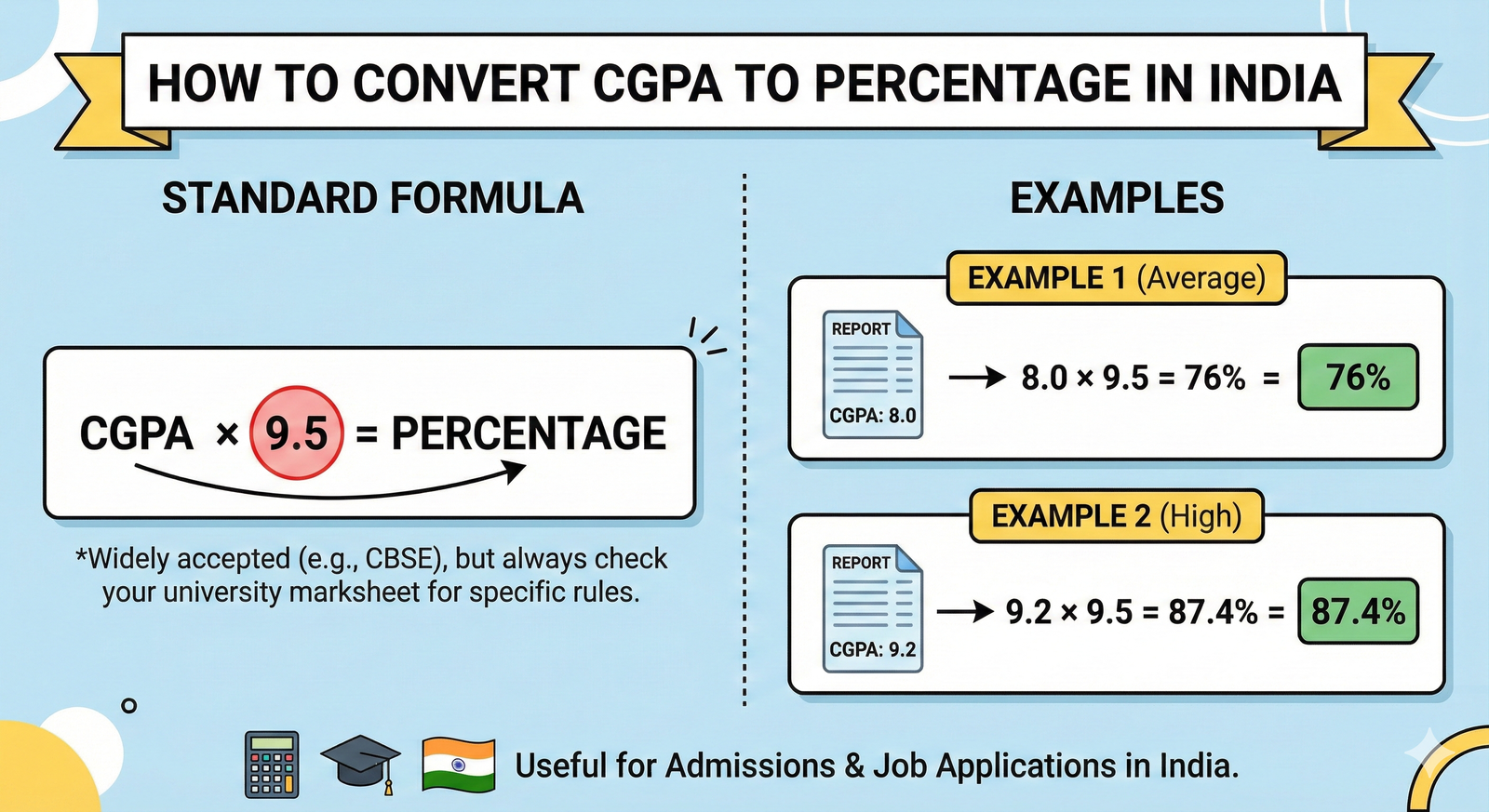
- Precision Filtering: Companies receive thousands of applications. A CGPA of 8.0 could mean anything from 75% to 80% depending on the formula. Asking for an exact percentage helps HR filter candidates strictly (e.g., “Cutoff > 60%”).
- Tie-Breaking: If two candidates have a 9.0 CGPA, how do you decide who is the topper? The percentage reveals the minute difference (one might be 91%, the other 94%).
- Legacy Systems: Many Indian recruitment portals are built on older frameworks that only accept absolute numbers, not grade points.
Comparison Table: CGPA vs Percentage
| Feature | Percentage (%) | CGPA (Grade Points) |
|---|---|---|
| Accuracy | Highly Precise (shows exact score) | Broad (groups scores into bands) |
| Stress Level | High (every mark counts) | Moderate (focus is on grade bands) |
| Global Acceptance | Low (mostly used in India/Asia) | High (Global standard) |
| Used For | Competitive exams, Placements | Higher Education, MS/MBA Abroad |
Which is Better: CGPA or Percentage?
The answer depends entirely on your next step.
1. For Higher Studies (MS/MBA Abroad)
Winner: CGPA
Foreign universities understand the GPA scale. If you apply with a percentage, you often have to pay for a third-party evaluation (like WES) to convert it to a GPA. Having a high CGPA (above 8.5) is excellent for global admissions.
2. For Placements & Government Jobs
Winner: Percentage
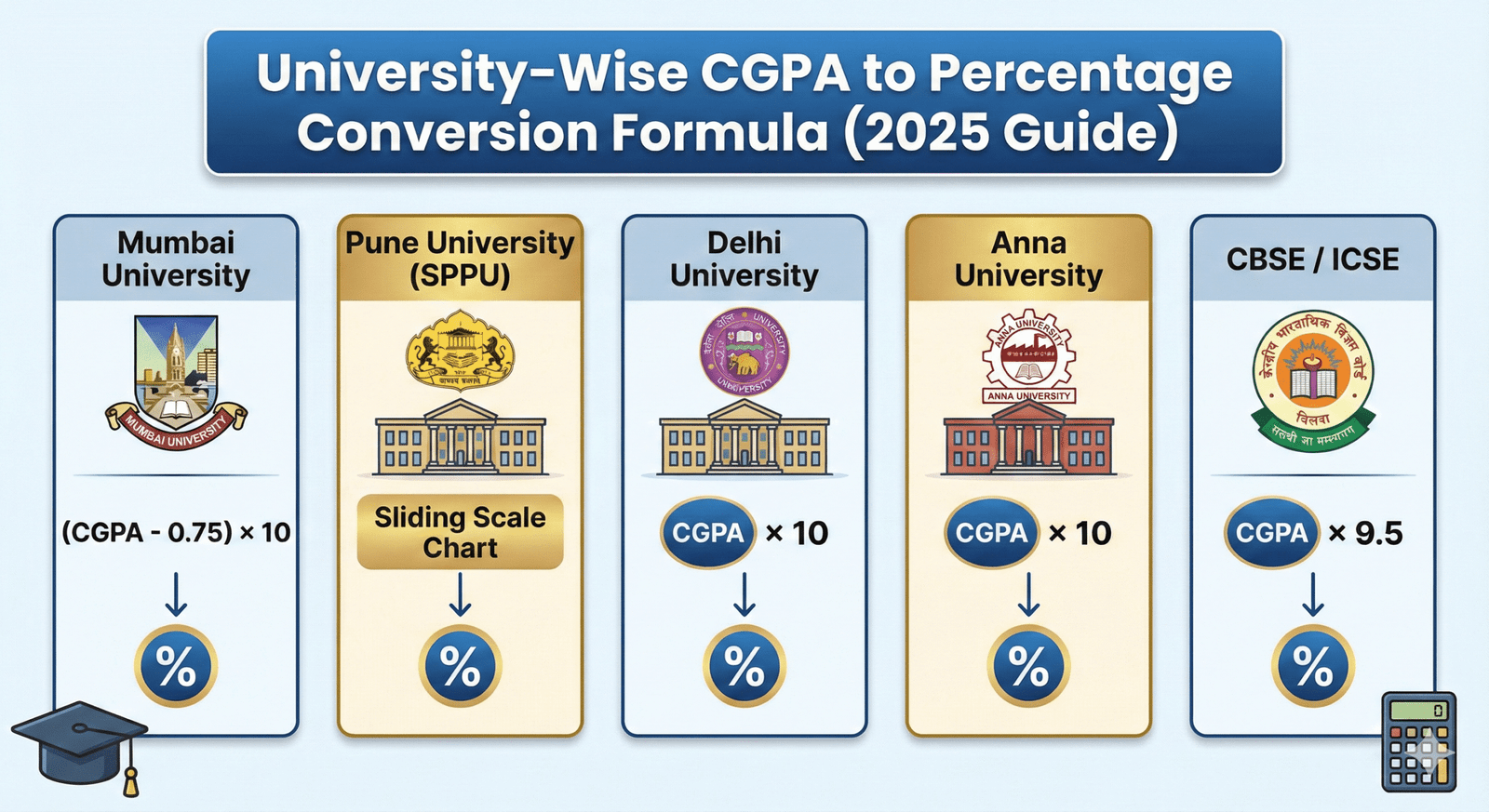
In India, the percentage is king for initial screening. Most companies have strict cutoffs (e.g., “60% throughout 10th, 12th, and Graduation”). Even if you have a CGPA, you will likely be asked to convert it using the standard formula.
CGPA is better for your mental health and global mobility. Percentage is better for precision and Indian corporate recruitment.
Conclusion
Ultimately, the CGPA vs Percentage battle is about “Grading vs Marking.” While the world is moving towards the gentler CGPA system, the Indian job market still values the precision of percentages. The best strategy? Maintain a high CGPA, but always know your conversion formula so you can quote your percentage when HR asks!