How to Convert CGPA to Percentage in India (With Formula & Examples)
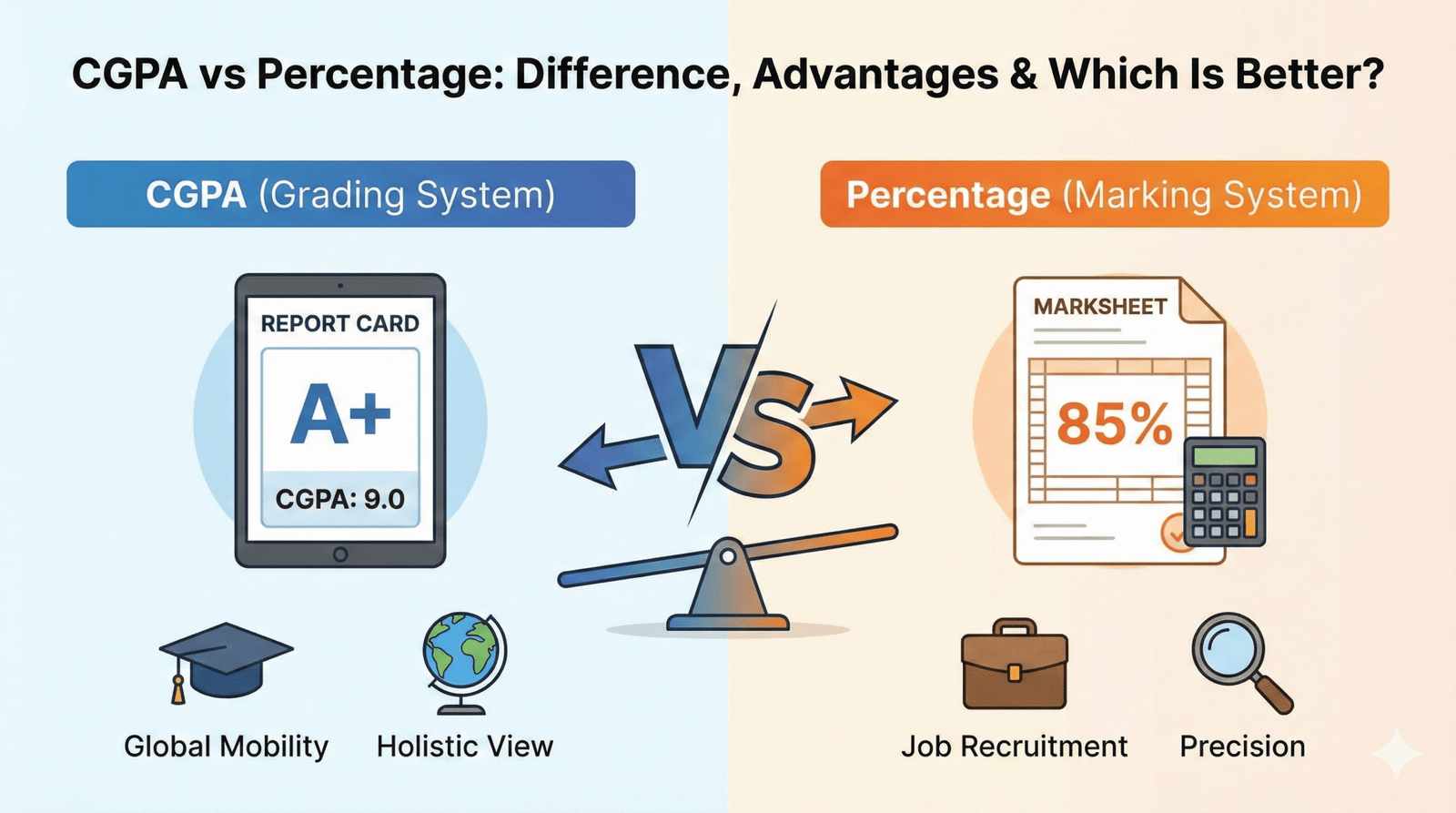
So, you just got your final semester results or your 10th marksheet. You are staring at a number like “8.4” or “9.2” CGPA. You feel good about it, but then you open a job application or a college admission form, and it asks for a “Percentage.”
Confusing, right? You are definitely not alone. This is a classic hurdle for students across India, whether you are from CBSE, an engineering college, or a state university.
Don’t worry—converting those grade points into a recognizable percentage is actually very simple. You don’t even need a fancy CGPA to % calculator. In this guide, we will break down exactly how to do the math yourself in seconds.
The Standard Formula (The 9.5 Rule)
For the vast majority of students in India, especially those under the CBSE board for Class 10 and 12, there is one “golden rule” for this conversion. It is widely accepted across most institutes.
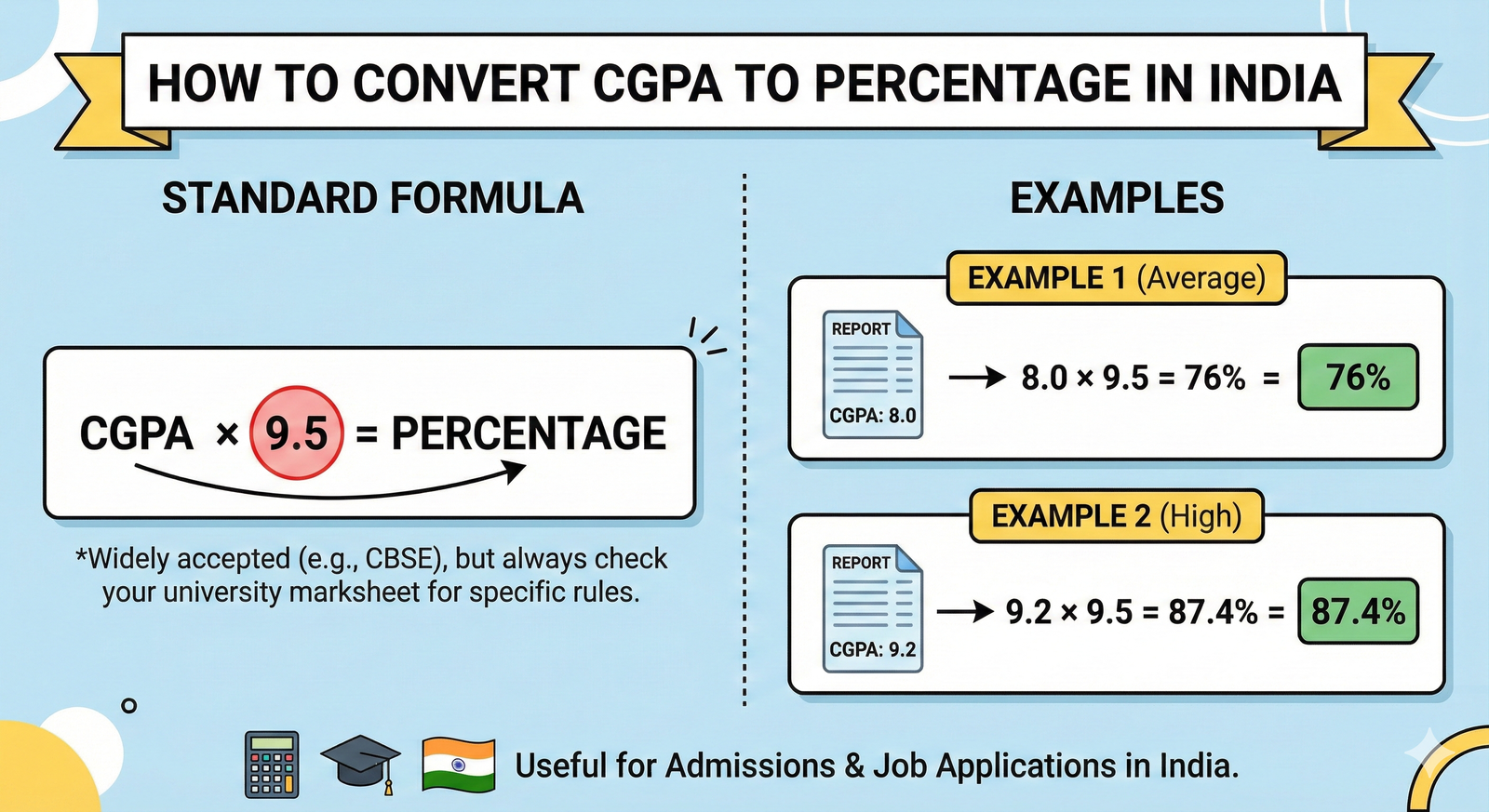
The standard CGPA conversion formula is:
Why 9.5? You might wonder why we don’t just multiply by 10. Without getting too technical, educational boards determined that the average score of students in the top grade band statistically hovered around 95%, not 100%. Therefore, 9.5 became the accepted multiplier to get a realistic percentage value.
The Simple Steps:
- Take your overall CGPA mentioned on your marksheet.
- Open your phone calculator.
- Multiply your CGPA by 9.5.
- The final number is your percentage.
Practical Examples of the Conversion
Let’s look at a couple of real-world scenarios to see how easily this works.
Example 1: The Solid Performer
Imagine Priya scored a cumulative grade point average of 7.8 CGPA.
To find her percentage, she simply does the math:
Calculation: 7.8 × 9.5 = 74.1
Priya’s percentage is 74.1%.
Example 2: The Top Scorer
Imagine Rahul scored a perfect 10 CGPA.
Calculation: 10 × 9.5 = 95
Rahul’s percentage is 95%. (Note: Even with a perfect 10 Grade Point, the standard calculation caps the percentage at 95%).
Wait! When Does the Formula Change?
This is the most crucial part of this guide. While the “multiply by 9.5” rule is super popular, it is NOT universal.
In India, universities have autonomy, meaning they can set their own grading rules. Before you fill out that important form, you must check the back of your official marksheet or transcript.
If your university has a specific formula, it will usually be printed there in small text. If it is, you MUST use that instead of the 9.5 rule.
Common University Variations:
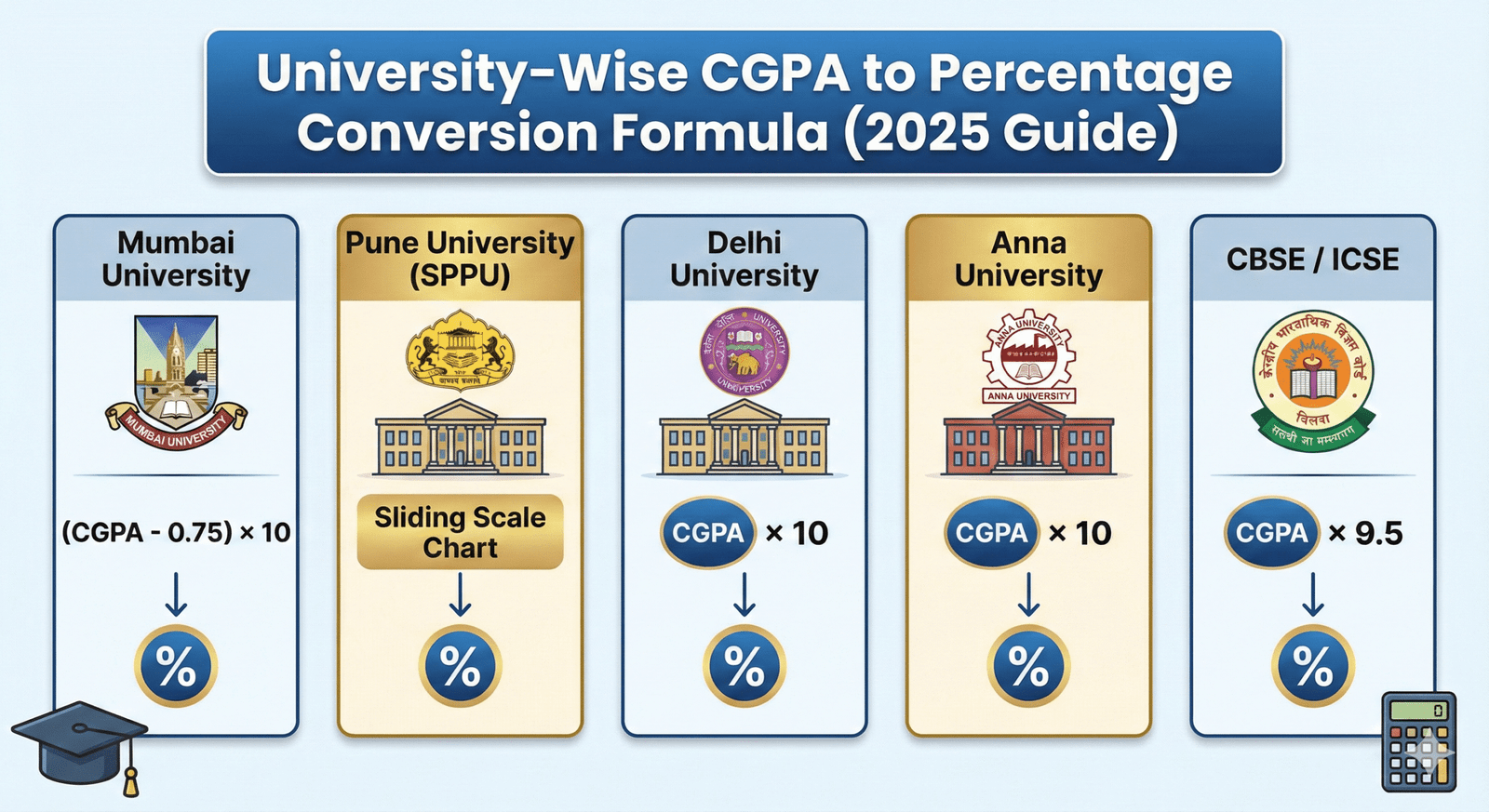
- Direct Multiplication by 10: Many modern engineering colleges (like some under VTU or Anna University in certain years) have simplified things. If your CGPA is out of a 10-point scale, they might just ask you to multiply by 10. (e.g., 8.2 CGPA = 82%).
- Mumbai University (Older Scales): Some older 7-point grading scales used complex multipliers like 7.14 or 7.25. Always check your specific batch rules.
- Complex Formulas: Some technical institutes use formulas that look like: (CGPA – 0.75) × 10.
- Applying Abroad: If you are applying to foreign universities, they often do not accept a simple conversion. They may ask for a “WES Evaluation,” which is a different process entirely.
Summary: The Quick Checklist
Converting CGPA to percentage doesn’t have to be a headache. Just follow these quick steps to ensure accuracy:
- ✅ First Check: Look at the back of your original marksheet for a specific university formula. If it exists, use it.
- ✅ Default Rule: If no formula is given (common for CBSE), use the standard method: CGPA × 9.5.
- ✅ Double Check: Do the math twice before hitting submit on an application form!